What to Look for in an Architect Before Starting Your Home Design
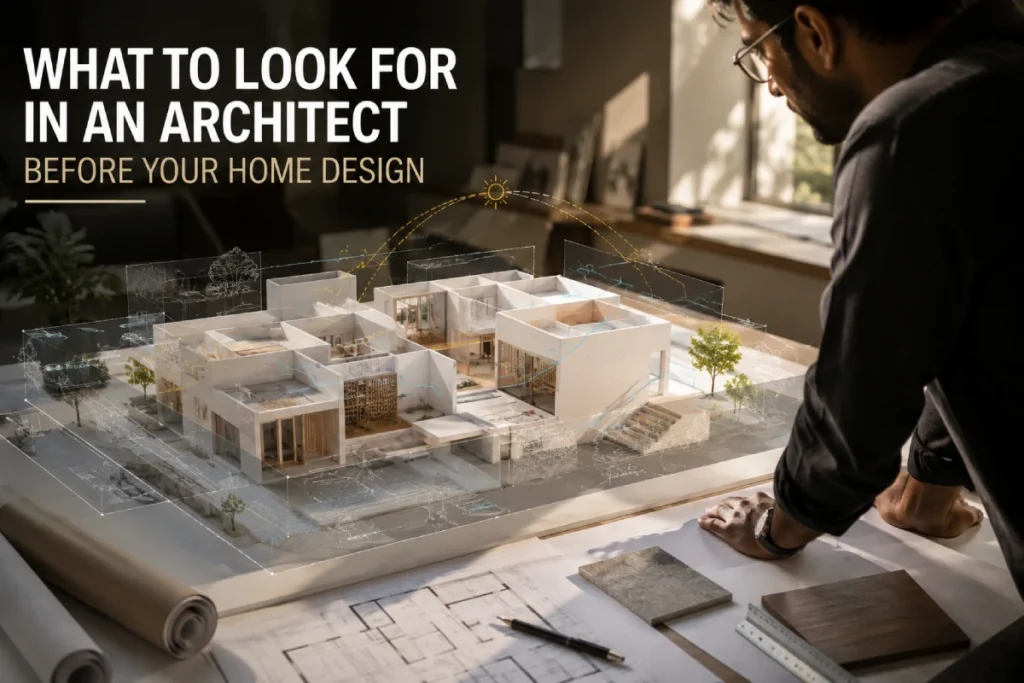
Choosing an architect is one of the first important decisions you make when planning a home.
Most homeowners begin by looking at portfolios, project photographs and design styles. While these can tell you what an architect’s work looks like, they don’t tell you everything you need to know.
Designing a home involves much more than creating an attractive elevation. The architect needs to understand your requirements, study the site, work within the project’s budget and take the design towards execution.
So before choosing an architect, it is worth looking beyond the portfolio and understanding how they approach your project. Here is what that actually involves.
Understanding your requirements comes first
Every family uses their home differently.
Before starting the design, an architect should understand your lifestyle, family structure and day-to-day requirements. How many family members will live in the home? Do you entertain often? Do you need spaces for elderly family members? How much privacy do you want? Will your requirements change in the future?
There may also be specific requirements such as Vastu, a home office, a puja room, additional storage or spaces for guests.
These details may seem small individually, but together they shape the way a home should be planned. A good design starts with understanding the people who will live in it.
Look beyond the portfolio
A portfolio shows you what an architect has designed. It doesn’t always show you how they arrived at the design, or whether that experience matches your own project.
When reviewing past work, look at projects relevant to your requirements rather than only the ones you find visually appealing. Then ask about the thinking behind them. Why was the house planned this way? How did the design respond to the client’s lifestyle? Why were certain materials or spatial arrangements chosen?
An architect’s ability to explain these decisions tells you more than photographs alone. And pay attention to whether they’re willing to challenge an idea when necessary. A reference photo from Pinterest may look beautiful, but it may not suit your site, budget, climate or lifestyle. A good architect explains why, and suggests a better alternative.
You aren’t only hiring an architect for their design. You’re hiring their judgement.
See how they read your site
No two plots are exactly the same. Orientation, dimensions, access, surrounding buildings, natural light, ventilation and privacy can all influence the design.
For a home in Ahmedabad, climate is another important consideration. The way a house responds to heat, sunlight and ventilation through Gujarat’s summers can shape planning and material decisions long before elevations are discussed.
An architect should study these conditions before deciding what the house should look like. Good architecture responds to its surroundings, not the other way around.
Understand their design process
A home design doesn’t happen in one step. There’s usually a sequence: understanding the brief, studying the site, developing the concept, refining the design, and preparing the drawings required for construction.
Ask the architect how this works in practice. How are your requirements translated into the initial design? How are changes and feedback handled? At what stage are materials and finishes discussed?
Understanding the process tells you what to expect before the project begins, and gives you a chance to see whether the architect’s way of working actually suits you.
A 3D view is only one part of the design
3D views are useful. They help you visualise a space before it’s built. But a 3D image isn’t a construction document.
Before appointing an architect, understand what drawings and documentation sit within the scope. Depending on the project, this may involve architectural drawings, working drawings, structural coordination, and liaison with other consultants. The exact scope varies between firms, so it’s worth clarifying at the start rather than assuming.
The design has to work on paper, and stand up to a structural audit, before it can work on site.
Talk about budget and scope early
Budget should be part of the conversation from the beginning. You may not know the exact construction cost when you first meet your architect, but a realistic budget range gives the project its direction.
The budget influences the scale of the home, the planning, materials, finishes, services, and the level of detailing. It’s equally important to understand what’s included in the architect’s professional scope, and what isn’t structural consultancy, government liaison, and site supervision are often billed separately.
An honest conversation early on avoids unrealistic expectations and major changes later. Good design also has to make sense financially.
Understand their role during execution
The design process doesn’t necessarily end when the drawings are complete. Once construction begins, decisions still need to be made – materials may need clarification, site conditions may change, and details may need resolving on the spot.
Ask what the architect’s role will be once construction starts, and how design-related questions get handled from there. This scope of involvement differs between firms, so clarity at the beginning prevents confusion later, especially around Ahmedabad Municipal Corporation approvals and site inspections.
Pay attention to the first conversation
You can learn a lot before any design work begins.
Notice whether the architect is trying to understand your requirements, or simply presenting their own ideas. Do they ask about your lifestyle? Do they want to understand the site? Are they comfortable discussing the budget directly? Can they explain their process clearly, without vague language?
These early conversations matter because designing a home involves many decisions over a long period. You should feel comfortable discussing both what you want, and what may not work.
How HPA approaches the design process
At HPA, the process begins with understanding the project before developing the design. The site, the client’s requirements, the budget, and the overall scope all shape the direction that follows the way it did for the twin bungalow at Science City, where two families sharing one plot needed the design built around how each of them actually lives, not a shared elevation.
The objective is to create a home that responds to the people living in it, its surroundings, and the practical realities of building it. Because good architecture starts with understanding, before it starts with designing.
Before you make your decision
Before choosing an architect, look beyond the portfolio.
Consider how they understand your requirements, approach your site, discuss your budget, explain their design decisions, and take the project towards execution. The right architect should bring more than a design style to your project. They should bring a process, and a judgement, you can trust.
Frequently Asked Questions
How do I choose the right architect for my home?
Look beyond the portfolio. Consider the architect's relevant experience, design approach, understanding of your requirements, scope of work, budget discussions, and involvement during execution.
What should I discuss with an architect before starting the design?
Your lifestyle, family requirements, site, an approximate budget, design preferences, and any specific requirements such as Vastu. It also helps to share references that communicate what you like.
Should I discuss my budget with an architect at the beginning?
Yes. You may not have an exact figure, but sharing a realistic range gives the architect an important starting point for the design.
Is a portfolio enough to choose an architect?
No. A portfolio shows completed work, but doesn't always explain the thinking behind it. Ask about similar projects and understand the reasoning behind their decisions.
What should I know about an architect's scope of work?
Understand what's included: the design process, drawings, structural and consultant coordination, site visits, and execution-stage involvement. This varies between firms, so clarify it before starting.
Do I need a structural engineer if I'm only hiring an architect?
For anything involving structural changes, yes. Ask upfront whether the architect coordinates this in-house or expects you to hire separately.
How important is the local Ahmedabad experience?
Significant. Setback rules, FSI limits, and AMC approval timelines are city-specific. An architect without recent local approvals may face delays that end up as your delays too.
How many architects should I meet before deciding?
Two or three is reasonable. Compare how each one approaches your requirements and site, not only their fee quotes.
When should I hire an architect?
Ideally before major design or construction decisions are made. Early involvement gives the architect more room to study the site and shape the project around your requirements from the start.