10 Creative Office Interior Design Ideas for Small Spaces
Updated March 19th, 2026
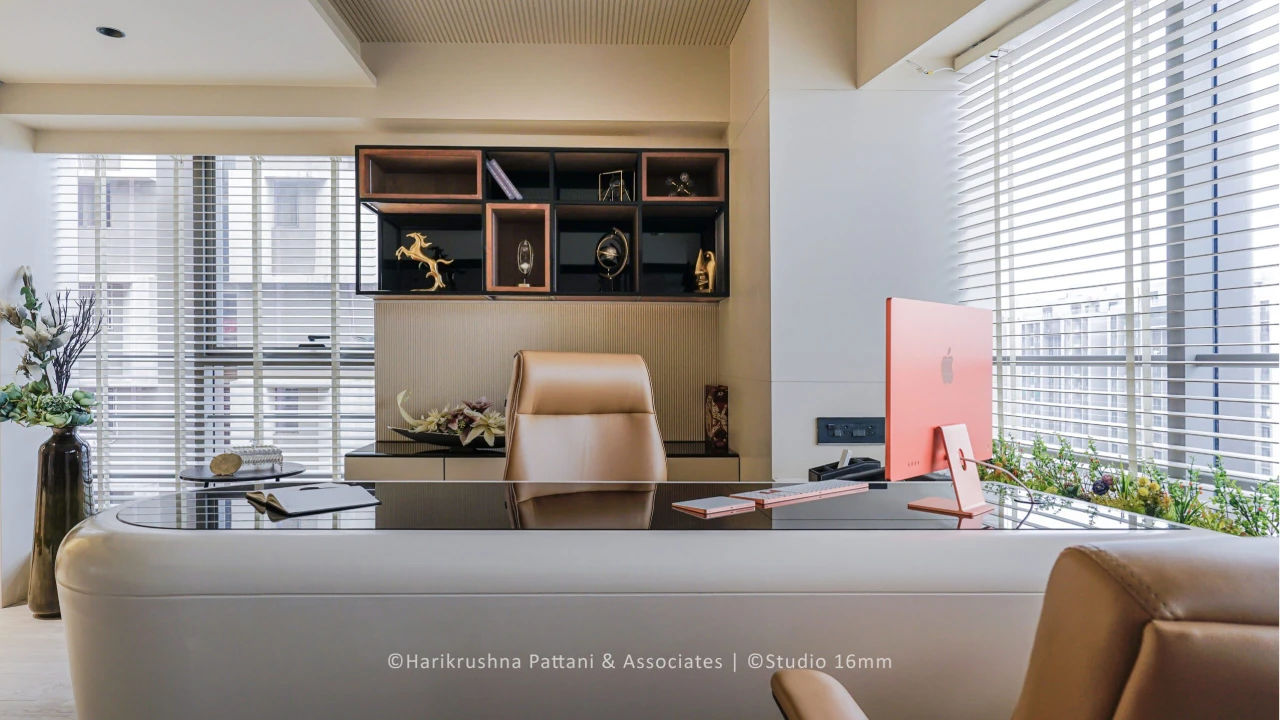
If you’re working with a small office, you already know the challenge, every corner matters. One bulky desk, one extra cabinet, or one poorly placed partition can make the entire space feel cramped.
But small does not mean limited. With the right office interior design for small spaces, even a compact office can feel open, organised, and professional. The key is planning smarter, not adding more.
In this blog, you’ll discover practical, easy-to-apply creative office design ideas that help you use space better, improve comfort, and make your small office work harder without feeling crowded.
10 Creative Office Design Ideas That Make Small Spaces Feel Bigger and Work Better
Small offices work best when every square foot has a purpose. The ideas below focus on layout efficiency, smart storage, and visual openness to help you create a workspace that feels bigger, cleaner, and more productive without adding extra area.
1) Switch to Shared Workstations Instead of Individual Desks
Large standalone desks take up unnecessary space, especially when each one needs clearance around it. Instead, use shared or “benching” workstations where desks are aligned in a clean row.
This approach reduces wasted floor area and makes wiring easier to manage. It’s one of the most practical compact office design ideas because it increases seating without increasing clutter.
Why it works: You create more working space while keeping pathways clear.
Quick tip: Choose slim desks with shared cable trays and small under-desk drawers instead of bulky storage units.
2) Use Vertical Storage Instead of Floor Cabinets
In small offices, storage often becomes the biggest problem. Adding more cabinets only makes the room tighter. The smarter solution is vertical storage.
Wall-mounted shelves, tall narrow cupboards, pegboards, and overhead cabinets free up valuable floor space. This is one of the simplest space-saving office design solutions.
Why it works: When storage moves up, the floor looks cleaner and the room feels bigger.
Quick tip: Create one “storage wall” so the rest of the office remains open and uncluttered
3) Create a Compact Meeting Corner Instead of a Full Conference Room
Many small offices try to fit a full meeting room and end up losing flexibility. Instead, create a compact meeting zone with a round table for 2–4 people.
This approach supports collaboration without isolating a large section of the office. It’s one of the most effective small office layout ideas.
Why it works: You keep the office open while still having a place for discussions.
Quick tip: Place the meeting corner near a window or entrance to avoid blocking work areas.
4) Use Glass Partitions Instead of Solid Walls
Full-height walls block light and visually shrink the room. Glass partitions or half-height dividers maintain privacy while keeping the office bright.
Modern offices use reeded or frosted glass for subtle separation without closing off the space. This is common in modern small office interiors because it balances openness and function.
Why it works: Natural light spreads throughout the office, making it feel larger.
Quick tip: Use frosted film at eye level for privacy without losing transparency.
5) Improve Lighting to Make the Space Feel Bigger
Poor lighting makes small offices look smaller. Dark corners and glare from screens create discomfort.
Instead of relying only on ceiling lights, add task lighting like desk lamps or under-shelf lights. Balanced lighting enhances the overall feel of the office.
Why it works: Well-lit spaces look more open and welcoming.
Quick tip: Use warm white lighting and matte finishes to reduce glare.
6) Design One Multi-Functional Wall
In compact offices, flexibility matters. Instead of adding separate boards, cabinets, and display units, combine them into one functional wall. This wall can include:
- Whiteboard for planning,
- Shelves for storage,
- Pinboard for notes,
- Concealed cabinets below.
This is one of the smartest creative office design ideas because it reduces furniture while increasing usability.
Why it works: One wall performs multiple roles, saving space elsewhere.
Quick tip: Keep colors consistent to maintain a clean look.
7) Plan Walkways Before Placing Furniture
Most small offices feel cramped because furniture is placed first and circulation is adjusted later.
Instead, mark clear walk paths before positioning desks and storage. Good movement planning is essential in office interior design for small spaces.
Why it works: Clear pathways make the office feel organised and comfortable.
Quick tip: Avoid placing drawers or swing doors into walking areas.
8) Control Sound to Improve Comfort
In small offices, noise spreads quickly. Phone calls, meetings, and conversations can disturb everyone.
Adding acoustic panels, soft boards, carpets, or fabric seating helps absorb sound. This improves comfort without changing the layout.
Why it works: Less noise makes the office feel calmer and more productive.
Quick tip: Create a small “call zone” in one corner for phone discussions.
9) Choose Lightweight, Minimal Furniture
Heavy, bulky furniture makes small spaces feel crowded. Slim tables, open-leg desks, and wall-mounted shelves create a lighter look. This is a core principle in compact office design ideas—visual weight matters as much as actual size.
Why it works: Light-looking furniture keeps the room feeling open.
Quick tip: Use neutral colors and avoid thick, dark finishes in small rooms.
10) Keep Design Simple and Focused
Trying too many design elements in a small office can make it feel chaotic. Instead of multiple feature walls and bold colors everywhere, choose one focal point. This could be:
- A clean logo wall
- A subtle accent color
- A simple lighting feature
This approach defines modern small office interiors—clean, simple, and purposeful.
Why it works: Minimal design reduces visual clutter.
Quick tip: Stick to two or three main colors for consistency
Conclusion
Smart office interior design for small spaces is about planning, not size. When storage moves vertically, lighting improves, circulation is clear, and furniture stays minimal, even the smallest office can feel organised and professional.
These creative office design ideas and small office layout ideas prove that compact offices can be efficient, comfortable, and visually appealing without adding more area.
If you’re planning to upgrade or design a compact workspace, Harikrushna Pattani & Associates can help you transform limited space into a high-performing office with thoughtful, practical design solutions.